


The Physics Department at the National Technical University of Athens (NTUA) is renowned for its cutting-edge research and innovation. One of its prominent groups, the Laser Materials Printing and Processing (LMP), is led by Prof. Ioanna Zergioti. The group’s research focuses on laser materials processing for optoelectronics and biological applications, contributing significantly to advancements in these fields.
Role
NTUA will define the specifications for the three sensor compartments in the UltraSense project, ensuring optimal architecture, material selection, and system integration. They will also manage strategic decisions, operational risks, and ethical compliance.
Key staff
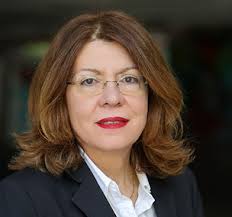
Dr. Zergioti Ioanna Zergioti has been a Professor at the NTUA, School of Applied Mathematics and Physical Sciences since 2003. She is a world-leading expert in laser printing with more than 30 years of experience and is among the first scientists worldwide to demonstrate the use of laser printing for the solid phase transfer of DNA. Since 2019 she has been an acting CEO at the spin-off PHOSPRINT, aiming to advance the regenerative applications of bioprinting. Her expertise includes the fields of laser-matter interaction, laser printing, laser processing of nanomaterials and laser bioprinting. She is a co-author of over 200 publications and an inventor of 7 patents.
On behalf of National Technology University of Athens (NTUA), Dr. Zergioti acts as the UltraSense Project Coordinator (PC) responsible for the overall coordination and technical monitoring of activities.
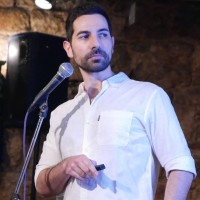
Dr. Filimon Zacharatos is currently a senior researcher in the physics department of the National Technical University of Athens (NTUA), working within the framework of EC and national funded projects. His current research interests are mostly focused on the laser processing of 2D materials, as well as thin metal films and nanostructures for applications in optoelectronics and flexible electronics.
Marina Makrygianni is a post-doctoral researcher at the Physics Department of the National Technical University of Athens within the framework of the Operational Program Competitiveness, Entrepreneurship and Innovation. The focus of her research is on the laser printing of organic electronics (i.e.: Organic Thin Film Transistors) and on the characterization of the printed devices.


Role
- Defining Use Case Requirements: Establishing the requirements for the two UltraSense use cases and their respective roadmaps.
- Wireless Data Transfer: Establishing the wireless transfer of data from all sensors to a paired mobile phone.
- Software Development: Developing software for processing and analyzing the data collected from the sensors.
- Sensor Integration: Ensuring that the sensors (Ultra-sound, GFET biosensor, and BIA) work as designed after full integration.
Key staff

With over 25 years of experience in the wearable technology industry and more than a decade in publicly funded international research and development projects, Juhani Kemppainen has a proven track record of excellence. He possesses strong expertise in management, project management, sensors, wearable sport technologies, e-textiles, sport sciences, application-specific integrated circuits (ASIC) including algorithms and data processing, and wireless technologies.

Expertise areas include optical measurement techniques for biomedical applications, such as optical coherence tomography (OCT), Doppler OCT, pulsed photoacoustics, laser pulse time-of-flight technique, optical tweezers and cell level interaction force measurements, optical tweezer-assisted elastic light scattering measurement from single or double red blood cells in different conditions, bioluminescence measurement, utilization of gold nanoparticles and nanostars as contrast enhancers, microfluidics.
Author and co-author in 31 peer-reviewed publications, currently 3 papers in review. Author and co-author in 27 conference proceedings, 25 of them in Proc. SPIE. 4 invited papers in Proc. SPIE and 1 book chapter. Author and co-author in over 50 conference presentations. Editor of two SPIE proceedings and three abstract books.

VTT is one of Europe’s leading research institutions. They are owned by the Finnish state. They advance the utilisation and commercialisation of research and technology in commerce and society. Through scientific and technological means, they turn large global challenges into sustainable growth for businesses and society. They bring together people, business, science and technology to solve the biggest challenges of our time. This is how they create sustainable growth, jobs and wellbeing and bring exponential hope.
Role
- Life Cycle Analysis: Conducting comprehensive life cycle analyses to ensure the sustainability and efficiency of the developed technologies.
- Reusable Electronics Platform: Developing a reusable electronics platform that can be integrated with various sensor technologies.
- Disposable Components: Creating disposable G-FET biosensors, microfluidics, and skin-contact layers.
- Integration and Testing: Integrating the reusable electronics platform with the disposable layers into a wearable textile strap and performing mechanical testing, including bending, stretching, and machine washing, to ensure durability and functionality.
Key staff
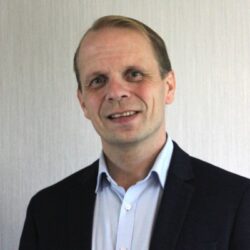
Dr. Jussi Hiltunen has started as a research professor of printed intelligence at VTT. He is responsible for promoting research in printed electronics and optics towards applied utilization. His goal is to increase the share of printing methods in the overall manufacturing chain.

Anni Ranta-Lassila is a Research Scientist at VTT Technical Research Centre of Finland. Her research focuses on the development and testing of biosensors, as well as phantoms for healthcare applications. She has a background in Biomedical and Chemical Engineering.
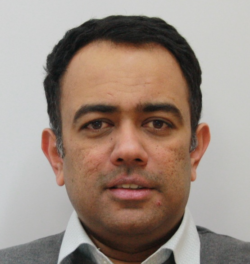
Cyril Karuthedath’s current research focuses on MEMS design and characterization, with a particular emphasis on PMUT technologies. He leads different activities at VTT, both publicly funded and commercial, related to PMUT platforms and system development for wearable and implantable applications

Lauri Rannaste is a Research Scientist at VTT Technical Research Centre of Finland. His research work focuses on microfluidics used for in vitro diagnostics and medical devices and sensors involved in them and their mass manufacturing. He is currently pursuing PhD in Prof Caglar Elbuken’s microfluidics research team at the University of Oulu, Finland.

Dr Liam Gillan’s research interests include printed electronics for sensor applications, with a focus on wearable sensors for sweat analytics. He has led and contributed to many projects developing sensors for monitoring of sweat rate and biomarkers. During 2020 and 2024 he was a Visiting Scholar studying sweat sensors in the group of Prof Ali Javey at the University of California, Berkeley.

Timo Kurkela is a Research Scientist at VTT Technical Research Centre of Finland, working with VTT Sensing Solutions in Oulu, Finland. His research work focuses on sensor technologies, structural electronics, and R&D projects involving advanced measurement systems and integrated electronics.


AMIRES S.R.O. is a consulting company for research, development and innovation projects. Their main strength is the creation of new international sustainable partnerships within innovation focused value chains. Their developed projects remain the main enablers for our industrial clients and their growth and provide the important opportunities for R&D community.
Role
Support NTUA in the Coordination of Science and Technology tasks
Lead Dissemination, Communication and Exploitation activities:
- Increase awareness of the potential of UltraSense technology among all relevant stakeholder groups.
- IPR management and exploitation strategies.
Key staff




Graphenea, a technology company founded in 2010, is a world leading graphene producer. The 40 employees in Graphenea work on contributing to the successful development of Graphene applications of our customers, in a wide range of sectors and in more than 60 countries in the world. Through research and innovation, we support our customers with our portfolio consisting of: CVD Graphene films, Graphene Field-Effect-Transistors chips (GFETs), Graphene Foundry Services (GFAB) and Graphene Oxides. Graphenea’s facilities are located in Spain (San Sebastián) and USA (Boston).
Role
Design and Development:
- Ultra-sound compartment design
- Bioimpedance compartment design
- GFET biosensor compartment design
Testing and Integration:
- Development and testing of an ultra-sound compartment
- Development and testing of flexible bioimpedance electrodes for body composition analysis
- Development and testing of graphene field effect transistors and their biofunctionalization protocol
Key staff

She obtained her PhD from the University of Strathclyde, UK and worked as a postdoctoral research scientist in two European projects. After that she worked in Ferring Pharmaceuticals (Scotland) as a senior polymer scientist for six years in the research and development of new controlled drug delivery systems. Her contribution in controlled therapeutics led to the granting of three patents in novel biodegradable and biostable polymers for controlling drug delivery. In 2010, she became the Scientific Director of Graphenea. At Graphenea, she leads the research and development activities on graphene-based materials. Since joining Graphenea, she has so far filed for sixteen patents and published more than 97 publications in peer reviewed journals, including Nature and Science. Principal Investigator in 29 EU FP7/H2020/HE funded research projects, 23 collaborative projects including the Graphene Flagship, the 2D-Experimental Pilot Line and the follow-up project the 2D-Polit Line. In the Graphene Flagship (10 year project), she was a member of the executive board and world package leader in the wafer scale integration.
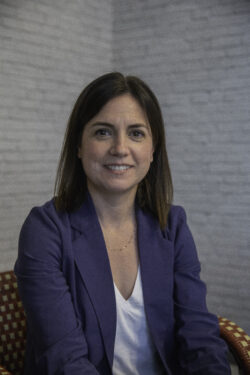
She obtained her PhD in biosensors from the University of Navarra, developing expertise in biosensors, fabrication, and characterization techniques. She spent five years at CIC nanoGUNE working on electrospinning, nanofluidics, and nanofabrication for biomedical applications, with postdoctoral research focused on polymer-based biomaterials. Since joining Graphenea in 2014 as Production Manager, she has overseen production planning and implemented lean manufacturing strategies. In the past three years, she transitioned to the R&D team and, more recently, to the role of Project Analyst, applying her technical expertise in graphene to high-impact projects.

She joined Graphenea in 2010 as Research Scientist and she was leading the R&D Team for 4 years. She is Chemist and holds a PhD in the field of Carbon-based materials from Instituto Nacional del Carbon (INCAR-CSIC). She is author and co-author of more than 60 publications and several patents. She has a wide international network of collaborators and did several short stays in Centers such as the Microsystems Technology Laboratories of Massachusetts Institute of Technology (MIT), Institute Heterogeneous Materials Systems of Helmholtz-Zentrum Berlin für Materialien und Energie and ST Microelectronics in order to extend her expertise in Graphene integration and promote graphene into industrial applications.


XTPL is shaping the future with microscale. They specialize in cutting-edge printing technology, driving advancements in manufacturing accuracy.
Role
- Synthesis of Graphene: Creating graphene on donor substrates specifically designed for Laser-Induced Forward Transfer (LIFT).
- Nanomaterials Synthesis: Producing nanomaterials like silver and gold and formulating them within a LIFT-compatible matrix system.
- Bioreagents and Biomarkers: Selecting appropriate bioreagents and assay formats, as well as identifying relevant biomarkers.
- Graphene Growth and Standardization: Upscaling and standardizing the growth of graphene.
- Nanoparticles and Ink Design: Optimizing and scaling up the synthesis of nanoparticles and designing inks for the LIFT deposition technique.
Key staff


Aleksandra Motyka is a Senior R&D Engineer and material scientist driving technology development at XTPL while pursuing a Ph.D. at the Institute of Low Temperature and Structure Research, Polish Academy of Sciences. With a double engineering background from Wrocław University of Science and Technology (M.Sc. in Organic and Polymer Chemistry; B.Sc. in Industrial Chemistry and Technical Physics/Nanoengineering), her expertise spans from organic synthesis and stereoselective mechanochemistry to nanoengineering and industrial analytics. Over the past 4 years, she has successfully managed the full lifecycle of advanced materials—from novel nanomaterial synthesis to formulating high-performance, high-viscosity inks and pastes for next-generation printed microelectronics.

The Technical University of Valencia is a leading technical university in Spain, known for its excellence in research and innovation.
Role
- Defining material specifications and the protocols required to biofunctionalize the graphene field effect transistors (G-FET) biosensor.
- Designing the GFET biosensor compartment.
- Developing and testing G-FET and their biofunctionalization protocol.
Key staff
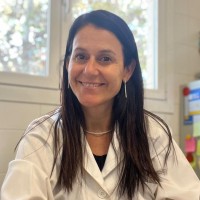
Dr. María José Bañuls is a distinguished researcher at the Instituto Interuniversitario de Investigación de Reconocimiento Molecular y Desarrollo Tecnológico (IDM, https://l1nq.com/g9dYu) and Professor at the Universitat Politècnica de València, specializing in Analytical Chemistry with applications in biotechnology.
Her work focuses on the development of cutting-edge analytical methodologies for DNA and protein biosensing, with applications in environmental, food, and clinical sciences. Among her key research areas are surface biofunctionalization, the synthesis of bioresponsive hydrogels, and their transformation into diffraction-based biosensing platforms for immunoassays and nucleic acid hybridization tests.
Dr. Bañuls has led and contributed to 36 research projects, including six European initiatives (two as principal investigator) and nine national projects (four as PI), along with various regional collaborations. Her prolific academic output includes about 80 scientific publications, more tan 180 conference contributions, and eight patents.
Her expertise and innovative research continue to advance biosensing technologies, making significant contributions to the fields of analytical chemistry and biotechnology.
Victoria González Pedro, Ph.D., is a postdoctoral researcher at the Universitat Politècnica de València. Her research focuses on materials chemistry, surface chemistry, nanomaterials manufacturing and processing, and biosensing. She has contributed significantly to the field of perovskite solar cells and has numerous publications in high-impact journals


Role
- AI model development
- AI model tailoring and testing in UltraSense use-cases
- Demonstration and validation of the MetSyn use case
Key staff
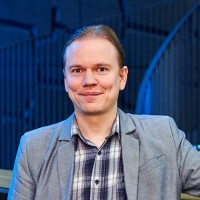
Prof. Simo Saarakkala is a leading expert in musculoskeletal imaging and biomechanics, focusing on osteoarthritis diagnostics and imaging. He is a Professor of Biomedical Engineering at the University of Oulu, Finland, with over 230 peer-reviewed publications and an h-index of 51. His research aims to understand and diagnose osteoarthritis early to improve treatment options.

University Researcher who coordinates the health vertical of the 6GESS-profiling theme at the University of Oulu, funded by the Academy of Finland. Her research interests include digital health, ICT interventions, health and eating behavior change, metabolic syndrome, obesity/adipose tissue, HDL-cholesterol, and cardiovascular diseases. Tuire has also coordinated the Profi5/DigiHealth-profiling theme and a research project/clinical intervention named PrevMetSyn – Prevent Metabolic Syndrome.
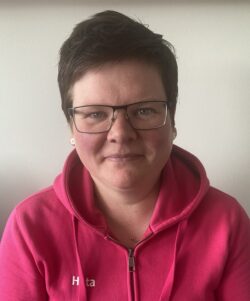
Heta coordinates to the coordination of the study, supporting its overall organization and execution. In parallel, she is responsible for handling blood samples and is actively involved in the analysis of 4β-hydroxycholesterol.

Medical Laboratory Technologist who serves as the central coordinator of clinical test visits within UltraSense project in Oulu. She is responsible for planning and organizing all practical aspects of study participant visits, from scheduling through to completion. Her hands-on role includes the collection of blood and sweat samples, as well as the full handling and processing of all biological specimens in the laboratory. In addition, she performs further sample analyses and conducts participant interviews.




The Jožef Stefan Institute is the leading Slovenian scientific research institute, covering a broad spectrum of basic and applied research. The staff of about 1050 specializes in natural sciences, life sciences and engineering.
The subjects concern production and control technologies, communication and computer technologies, knowledge technologies, biotechnologies, new materials, environmental technologies, nanotechnologies, and nuclear engineering.
Role
- Lifestyle management study protocol development and execution.
- Lifestyle management study data analysis and validation.
Key staff
Prof. Igor Mekjavić is a Scientific Councillor at the Jožef Stefan Institute in Ljubljana, Slovenia, specializing in environmental physiology. He has an extensive research background in temperature regulation, diving, hypoxia, and gravitational physiology, with an h-index of 47 and over 9,400 citations. Prof. Mekjavić is recognized for his contributions to understanding human physiological responses in extreme environments.
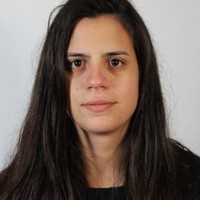
Lydia is environmental physiologist, focusing on the thermoregulatory function of the vasomotion system. During the last years, she participated in several European and international funded projects.

Dr. Nejc Kejzar is a postdoctoral researcher at the Jožef Stefan Institute in Ljubljana, Slovenia. Thanks to his interdisciplinary background in biochemistry, biophysics, neuroscience and computational modelling, his main focus lies in bridging the gap between artificial intelligence (AI) and biomedical sciences. Specifically, with experience in data-driven research spanning both academia and industry, he is developing novel AI solutions that will pave the way for personalized medicine and advanced life-support systems for humans in extreme environments.

Bettera’s mission is to deliver high-quality services in health economics, regulatory affairs, and social impact assessment that help their clients develop, implement, and market their medical technologies in a sustainable and ethical way.
Role
- Regulatory Strategy
- Business sustainability and commercialization
Key staff

Prof. Petra Marešová, Ph.D., MBA, is CEO of Betthera. She holds a Ph.D. in Information and Management and has extensive experience in economics, healthcare, and technology innovation. Prof. Marešová has contributed significantly to various research projects and publications, focusing on areas such as smart cities, Alzheimer’s disease diagnosis, and the economic impact of healthcare innovations.
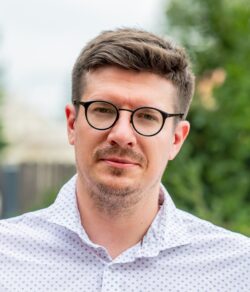
Lukáš Peter, Ph.D., is a regulatory affairs specialist at Betthera, where he focuses on ensuring compliance with regulatory requirements for medical technologies. He has extensive experience in the development, testing, and commercialization of medical devices, contributing significantly to the success of various project.
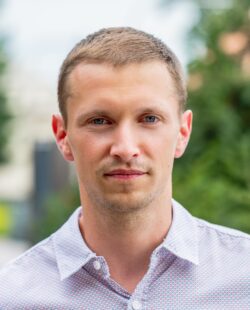
Lukáš Režný, Ph.D., is a specialist at Betthera, where he focuses on health economics and the development, testing, and commercialization of medical technologies.
